The last great technology era was built on attention, data, and delivery. Trillion-dollar companies ran on software that needed a phone, some venture capital, and not much else. Uber never built a car; DoorDash never built a kitchen or a delivery fleet; Facebook traded on our attention. It was a boom made of bits, layered on infrastructure that already existed — roads, cars, restaurants, phones. You could build the whole business without owning a factory, a warehouse, or a fleet.
The next boom looks nothing like that. It's physical - production and energy, and lots of both. Space and next-generation defense technology are the biggest pools of economic potential on the horizon, both capital-intensive and physical: rockets, satellites, propulsion systems, sensors, ships. AI is a critical part of what makes this possible — the modeling, targeting, and design intelligence behind next-generation hardware. But history suggests AI itself won't capture most of the value; what gets built with it will.
When electricity swept the economy, Edison and Westinghouse built real, lasting businesses — but the biggest fortunes went to whoever figured out what to build once cheap power was everywhere: mass manufacturing, refrigeration, the modern factory floor. AI looks like that same enabling layer. Valuations and personality fights around AI companies are one story; AI quietly getting embedded into how America builds physical things again is a different, more important one.
Meet the New Industrial Economy
After four decades of offshoring, the U.S. is in the early stages of a genuine industrial rebuild. Apollo Global Management reports: American manufacturing has shrunk from roughly 28% of GDP in the 1950s to about 9% today; major defense contractors have fallen from 51 to five, large shipyards from 19 to eight. Apollo estimates roughly $2 trillion is needed to restore manufacturing and defense capital stock to 2000s levels.
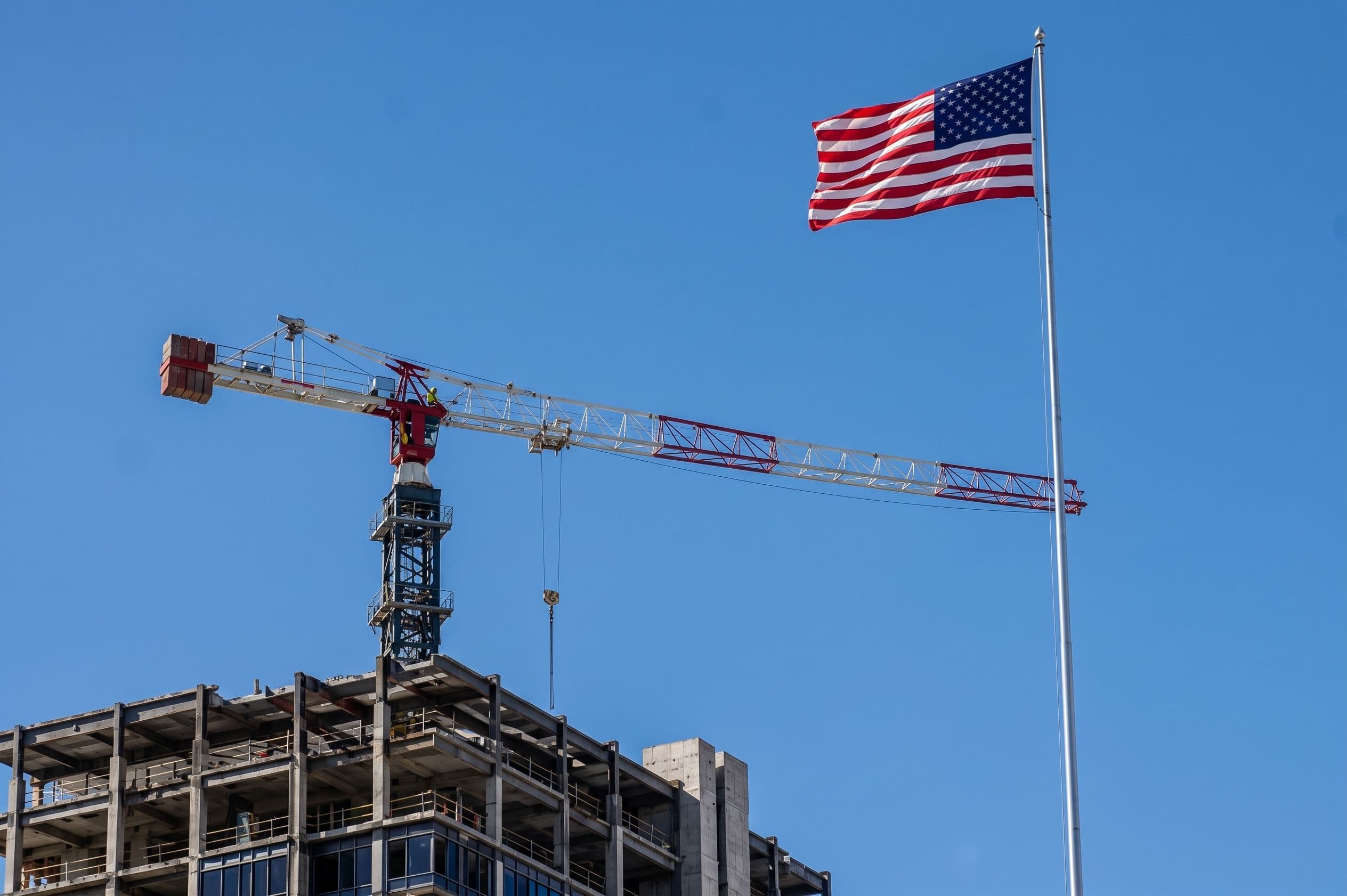
Opportunity doesn’t get any clearer than that. Construction spending on U.S. manufacturing and energy projects has roughly tripled since the pandemic. The data centers, fabrication plants, and launch facilities going up now are the visible edge of a larger shift in where American capital flows — back toward factories and physical infrastructure, after decades of flowing almost exclusively toward software.

 Michael Johannessen12 min read
Space Was an Idea – Now it is A Place
The popular image of the space economy is astronauts and billionaires - a handful of elite people strapping into rockets. That's not the real story, or why it matters economically. Building a rocket or a satellite requires welders, machinists, propulsion technicians, chip fabricators, materials scientists, and thousands of supply-chain jobs that never leave the ground - an industrial base like the ones that used to define American manufacturing towns, just aimed at orbit instead of the highway.
That's reindustrialization with a destination attached - job creation that shows up as cranes, payrolls, and new facilities, not line items in a funding round.
The Ultimate Collab
A decade ago, tech companies viewed Washington like many do their mother-in-law - a relationship to manage, not a partnership to build. That’s changing, because winning the American future is a team sport. It takes the ideas, the builders, the funders, and the government all pulling in the same direction — collaboration, not just capital or code. Marc Andreessen’s recent appointment to the Pentagon’s Defense Policy Board is one visible example of that shift: a sign that the flow of talent and ideas between Silicon Valley and Washington has become genuinely two-directional, for the first time in a generation.
That matters because space and defense tech can’t be built the way the last boom was. You can’t launch a rocket or field new hardware without a government customer, a regulator, or both. The road to scale runs through federal buildings and procurement offices, not around them.
Likewise, Washington can’t build this future on its own — it doesn’t have the engineers, the capital, or the appetite for the kind of risk-taking that produces breakthroughs. But it can do something just as important: empower the builders and keep the mission focused, setting the priorities, clearing the regulatory path, and putting real contracts behind the technology that matters most. That’s a different kind of leadership than picking winners or writing checks — it’s staying disciplined enough to let the private sector actually build, while making sure what gets built serves the country’s interests.
2028 candidates, of both parties: are you tracking? Whoever understands this and brings the conversation to the nation will have what is now, a wide-open lane: a tangible optimistic vision of the future and specifics ideas on how we get there.
Sources: Apollo Global Management; Bloomberg.