If there were any doubts about the culture changes underway at NASA, the comprehensive update on the Artemis Program given by Jared Isaacman, Amit Kshatriya and Jeremy Parsons put those to rest. It was as much an update on the missions, vehicles, hardware and tests, as it was a history lesson, and progress report on the agency’s efforts as it was for Blue Origin, SpaceX and Axiom Space.
Here are some takeaway words and phrases they shared:
“extreme ownership”
“measure in hours, not days and weeks”
“culture change”
“taking the handcuffs off to lead”
“accelerated approach”
“we’re not changing timelines, we’re changing how we do things”
“removing requirements, expanding opportunities”
“quick changes”
“blistering pace of production.”
If these words are the lyrical refrains from an Artemis-era songbook that is still being written, they suggest a new era of rhythm for NASA.
Beyond the avalanche of details about Artemis III and the lunar landers, what stood out was the tone and the expectations NASA’s leaders communicated. NASA briefings and updates are always serious affairs. They always have been. You have engineering, aeronautics and technology details being briefed alongside budget numbers, schedules and known and unknown outcomes. And don’t forget the gravitational forces of political and cultural environments that can change in an instant.
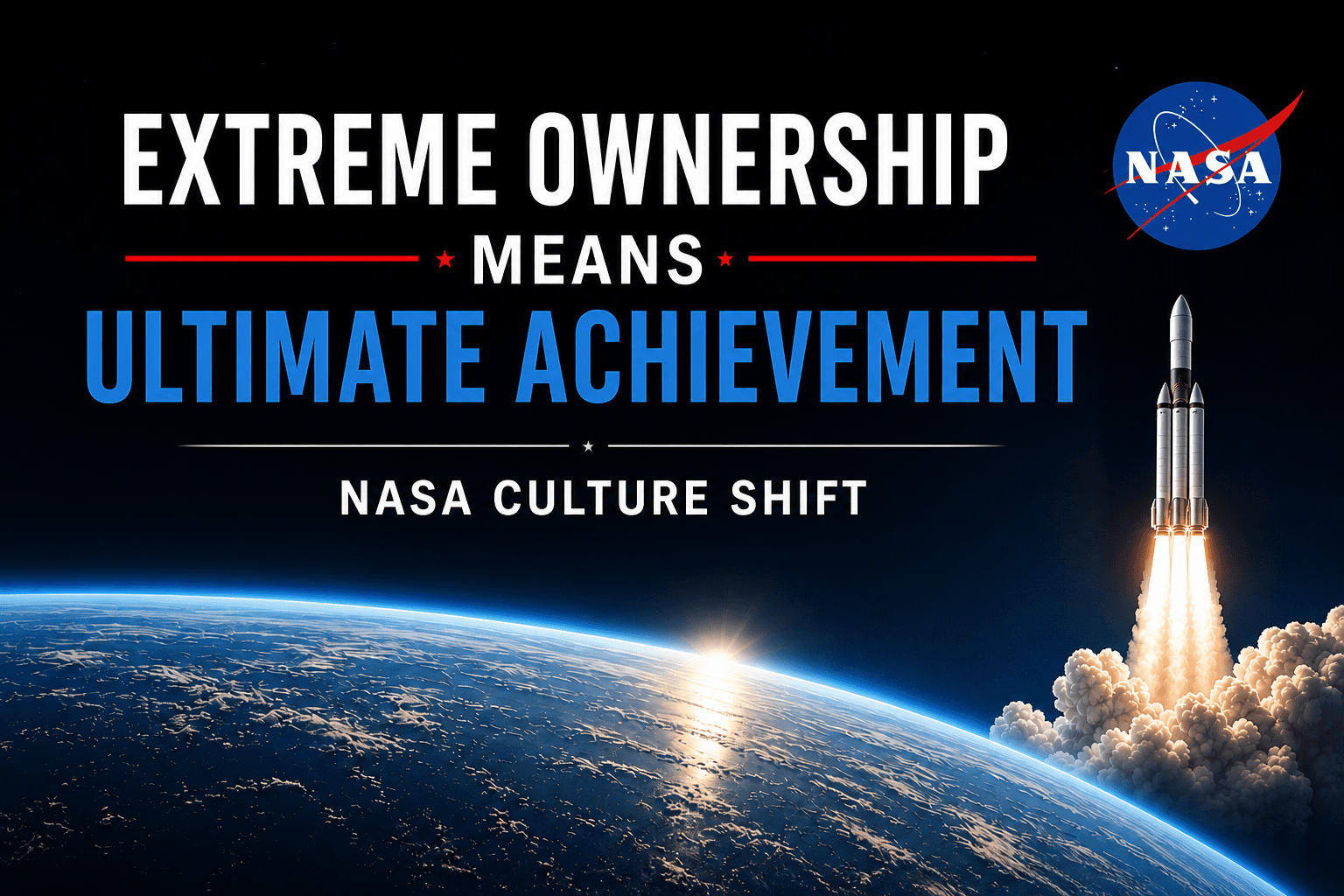
The October 23rd Artemis update had all of those factors but there was a dramatic shift that was conveyed and it comes down to the words of “extreme ownership.”
Those words may have been used in recent NASA leadership briefings and speeches but they really stood out and were reinforced throughout the briefing. For as much as NASA depends on its industry partners to produce the hardware and services that make America’s civil space program go, NASA’s leaders made clear that the agency intends to take a more active role in resolving problems alongside its partners than it has in the past.

They also made clear that the days of frequent change orders, months of analyses, and exhaustive studies that slide launch and mission schedules into drawn-out timeframes are over. If there is a problem that has been identified that could delay the schedule for anything related to Artemis, the upcoming nuclear power mission or other missions, NASA was going to be forward leaning on knocking on a vendor’s door to get things back on track.
The expectation, as I heard it, was to move from a ‘we’ll get back to you’ era to a ‘let’s solve this together’ era.
Driving this era and the cultural change in it is the space race with China where everyone knows second place is unacceptable – strategically, technologically and economically.
In leading this culture change, Administrator Isaacman and his team are giving no one permission for anyone to cut corners or act recklessly that would jeopardize safety. Rather, they are conveying that NASA at every level should never wait for a solution to come to them if there is an identified problem. Instead, NASA needs to be a more active participant with its industry and other partners in delivering solutions.
No one at any level of the space agency should ever be waiting to receive an outsourced solution from anyone. It is their responsibility to be there, onsite and at the ready to work to deliver that solution regardless of time, condition, location or circumstance.
Which brings us back to the phrase, “extreme ownership.” NASA has had more than its share of eras – the Apollo era, the Shuttle era, the ‘faster, better, cheaper’ era of Dan Goldin, the global collaboration era of the International Space Station and the rapidly expanding commercial space era of today.
All of them have their notable historical moments and while it is easy to look at the incredibly successful Artemis II mission as a cornerstone moment for the Artemis era, every era is shaped by the spirit and the ethos of the people who make it happen. As he approaches his first full year as Administrator, instilling a culture of “extreme ownership” at NASA may be the biggest game changer surpassing any budget boosts or technology breakthroughs.
For all the innovations and technologies that make our space achievements possible, it is ultimately people who make them happen. If Isaacman and his team can turn “extreme ownership” into an everyday practice—where problems are raised early, decisions are made promptly, and NASA and its partners work shoulder to shoulder on solutions—they will give America a stronger foundation for returning to the Moon. The test will be whether that urgency delivers safe, successful missions. That is where extreme ownership becomes ultimate achievement.